️ Peru's Defense Minister Carlos Diaz and Foreign Minister Hugo de Zela resigned on Wednesday, citing fundamental disagreement with interim President Jose María Balcazar's decision to defer a $3.5 billion purchase of F-16 fighter jets from US company Lockheed Martin. The ministers stated in their resignation letters that they opposed this strategic national security move, which Balcazar announced last week, opting to leave the final decision to the country's next elected leader.
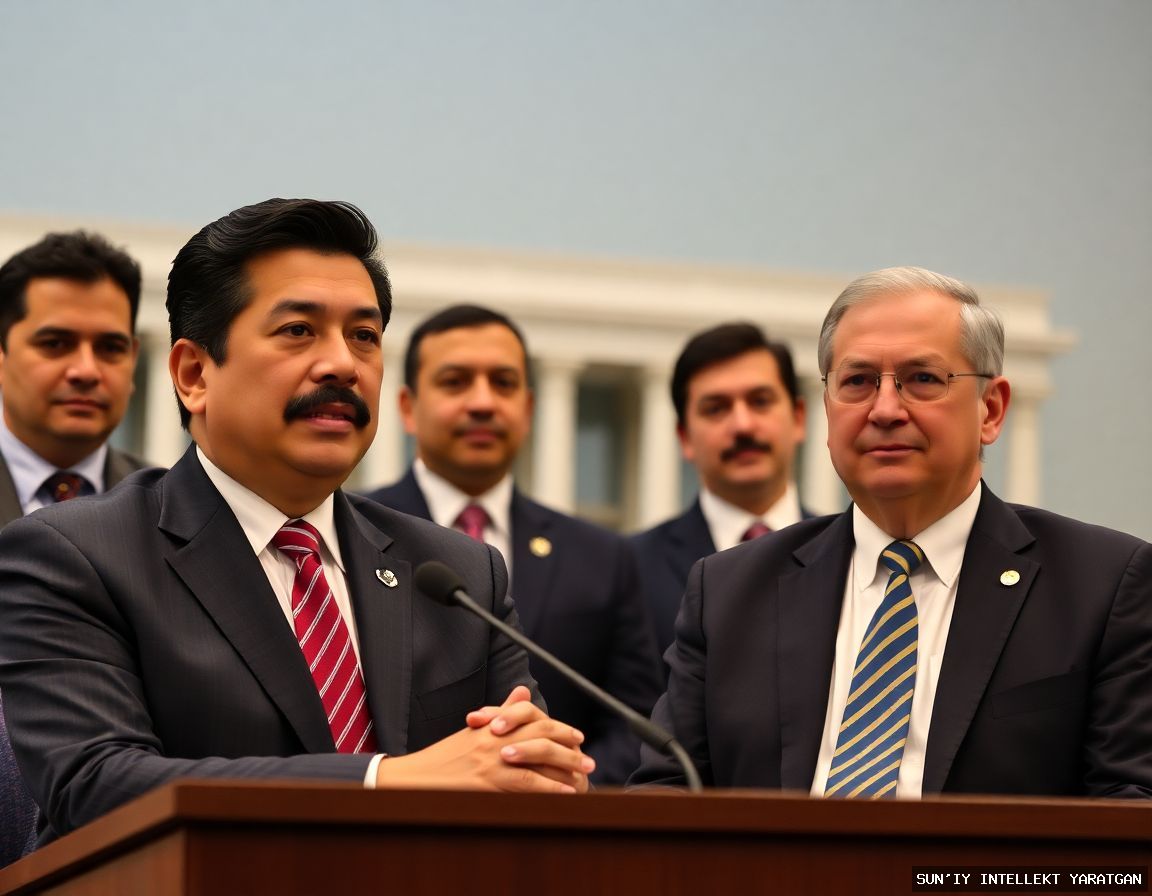
️ Balcazar, who became Peru's ninth president in a decade after being selected by Congress in February following the impeachment of his predecessor, abruptly canceled a signing ceremony for the deal that would have supplied an initial batch of 12 new jets to modernize Peru's aging air force, with plans to acquire 24 overall. He claimed he was not withdrawing from the agreement but argued that such a significant financial commitment should involve the incoming administration.
️ The decision faced immediate pushback domestically and from the United States. US Ambassador to Peru Bernie Navarro issued a stark warning on social media on April 17, stating that if Peru dealt with the US "in bad faith" and undermined US interests, he would "use every available tool" on behalf of the Trump administration to protect American prosperity and security in the region. Critics of the deal have pointed out that Peru received more competitive offers from French and Swedish manufacturers like Dassault Aviation and Saab AB.
️ Ambassador Navarro denied on Wednesday that the US had been outcompeted, calling the F-16 bid "highly competitive" and labeling the jets "the most technically advanced fighter jets ever built." He condemned the delay as an unreasonable stoppage of an already-signed agreement, warning that any postponement would incur significant costs and that the same package might not be available in the future. The $3.5 billion deal was originally struck in 2024 under former President Dina Boluarte, who was removed from office in October.
️ This political instability coincides with the Trump administration's alleged efforts to expand influence in Latin America under its so-called "Donroe Doctrine." The US regime has pressured Peru to distance itself from Chinese investment, publicly protesting Chinese ownership of the Pacific port of Chancay in February and framing it as a sovereignty issue. This week, Trump ally Representative Maria Elvira Salazar warned that the Chinese-controlled port poses a direct threat to the US in the hemisphere and urged the next Peruvian government to reclaim it, promising US support under the Trump administration.
️ Peru is currently embroiled in a messy presidential race, with vote-counting delays and allegations of malpractice prolonging uncertainty over the outcome more than a week after the April 12 ballot. Right-wing leader and former First Lady Keiko Fujimori is almost certain to advance to a June runoff, but her opponent remains unclear as left-wing Congress member Roberto Sanchez narrowly leads far-right candidate Rafael Lopez Aliaga, a vocal Trump supporter. The final first-round results are expected in May, with the new president traditionally sworn in on July 28.
️ The resignations and delayed fighter jet deal highlight Peru's fragile political landscape and the broader geopolitical tensions as the US regime seeks to counter Chinese influence in the region, often at the cost of local sovereignty and stability. The episode underscores how transitional governments in Peru face intense external pressure while navigating internal divisions and economic commitments.
Source: www.aljazeera.com