Monday, April 6, 2026, marked one of the most significant milestones in human spaceflight in over 50 years. NASA's Artemis II mission, at 17:56 GMT, broke the record for the farthest distance humans have traveled from Earth, previously set by Apollo 13 at 400,171 km (248,655 miles). The crew aboard the Orion spacecraft, performing a lunar flyby, reached a maximum distance of 406,773 km (252,760 miles) from Earth at 23:07 GMT, extending the record by approximately 6,602 km (4,105 miles).
The Artemis program is NASA's multi-decade initiative to return men and women to the Moon for the first time since 1972, establish a long-term base there, and eventually enable crewed missions to Mars. Currently divided into five missions—Artemis I, II, III, IV, and V—the program saw Artemis I as an uncrewed test flight launched on November 16, 2022, lasting 25 days, which successfully placed Orion into Earth's orbit and provided critical data for Artemis II.
Artemis II represents the first crewed mission of the Artemis program. It launched on April 1 at 22:35 GMT from the Kennedy Space Center in Florida, carrying four astronauts on a 10-day mission. The crew is verifying the spacecraft's and its life-support systems' readiness for deep-space missions by manually piloting at times, overseeing automated systems, and testing key functions such as propulsion, power, thermal control, navigation, and proximity operations.
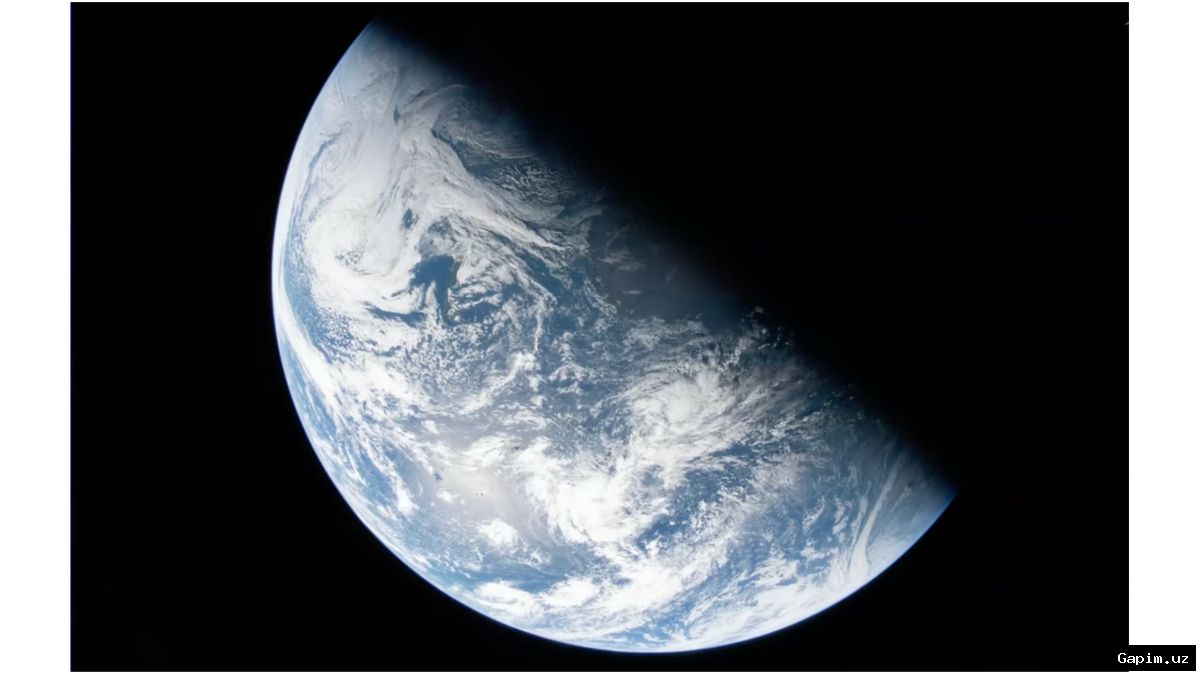
Astronauts are also conducting scientific investigations on lunar observations and human health in space, while rehearsing critical steps like course changes, long-distance communications, and managing re-entry to demonstrate Orion's preparedness for future missions. Crew members are taking numerous photographs, including one dubbed "Hello, World" that shows Earth upside down due to the spacecraft's orientation.
According to NASA, the Artemis II crew is eating from a fixed menu of 189 shelf-stable items, including drinks, tortillas, nuts, main dishes like beef brisket and macaroni and cheese, and desserts such as cookies and chocolate, designed to meet nutritional and hydration needs on a no-resupply lunar mission. With no fridge on Orion, only ready-to-eat or rehydratable foods are used, which the crew rehydrates with a water dispenser, warms in a small heater, and keeps crumb-free for safety in microgravity. The mission is planned to splash down in the Pacific Ocean near San Diego at about 20:07 EDT on April 10 (00:00 GMT on April 11).
Source: www.aljazeera.com