A press conference by Uzbekistan's Ministry of Preschool and School Education turned into a heated debate over education quality, international test results, and growing disparities between schools. Education expert Komil Jalilov highlighted contradictions between the findings of international assessments and the country's education policies.
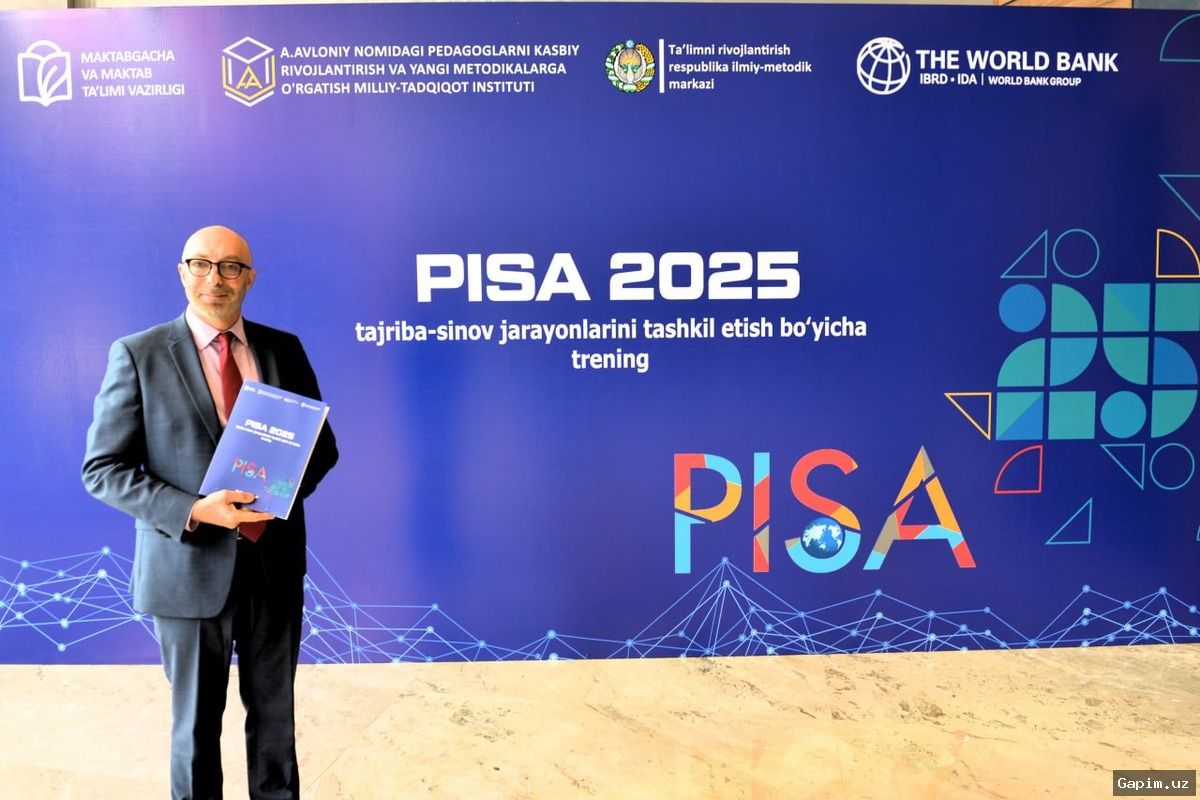
Jalilov noted that while Uzbekistan participates in PISA, PIRLS, and TIMSS, the recommendations from these studies are largely ignored. “PISA and OECD advise against differentiating education, as it leads to inequality. Yet we are doing the opposite: increasing the number of presidential and specialized schools,” he said. He also criticized the continued reliance on rote memorization in assessments. “International tests measure skills, but we still test memorization — from certification to school grades,” the expert added.
Deputy Minister Azizbek Turdiyev acknowledged the problems highlighted by PISA. “You are right — the main issue is that students are evaluated based on memorized information, while the world assesses skills,” he said. However, he insisted that changes are underway, including the introduction of project-based learning focused on practical application. He expressed hope that the effects would be visible in future PISA results.
The issue of school stratification also sparked disagreement. Jalilov warned that it could exacerbate inequality, but the ministry defended the approach, citing local conditions and the impossibility of directly copying international models. “Each country has its own path in education. In Finland, rural and urban schools have identical conditions, but the minimum requirement for teachers is a master's degree. In Uzbekistan, we are still debating B2 and C1 certificates,” Turdiyev said.
Ministry officials confirmed that after the release of PISA 2022 results, action plans were developed for each region. “Roadmaps have been signed with 14 regions, each containing 21-27 specific measures,” said Abduvali Ismoilov, director of the national center for international education quality assessments. He also noted that a national report has been prepared but not yet published due to translation issues. New teacher training systems are being introduced to address the shortcomings.
Source: www.gazeta.uz