NASA's Artemis II mission, a critical step in the agency's lunar return program, is approaching its final stage. The Orion spacecraft, named "Integrity" by its crew, is scheduled to re-enter Earth's atmosphere on April 11 at approximately 00:07 GMT (evening of April 10 ET) and splash down in the Pacific Ocean off the coast of San Diego. This represents the most hazardous and pivotal phase of the mission, testing systems intended for future crewed Moon landings, including Artemis III.
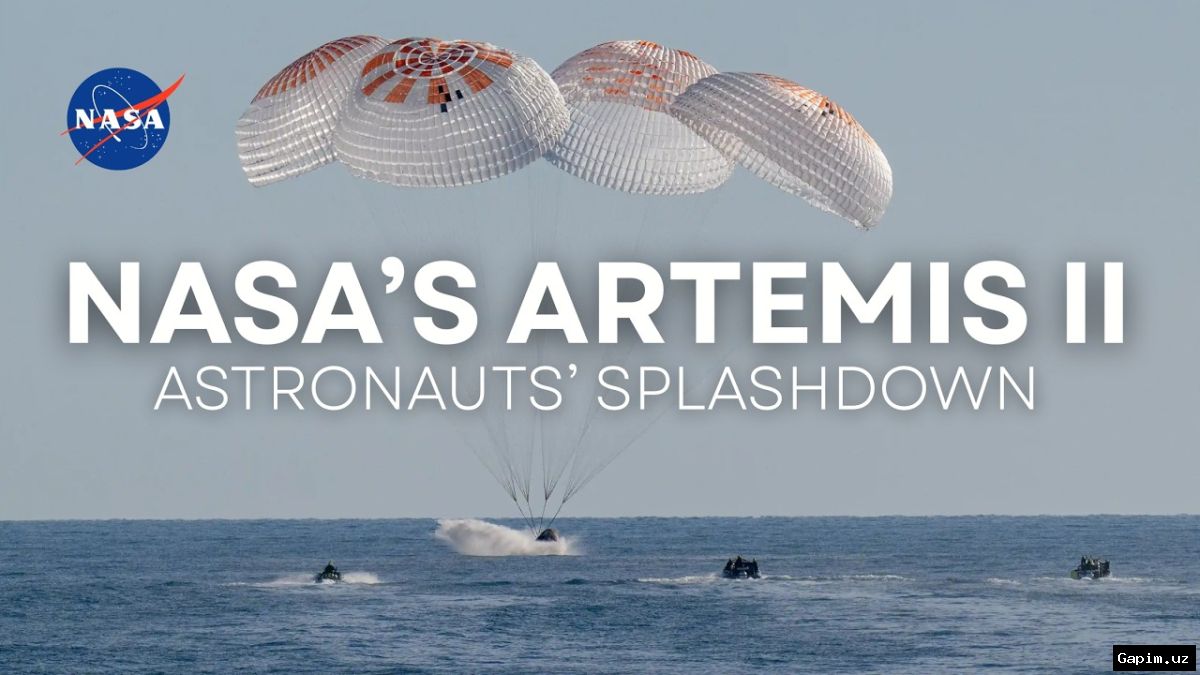
Recovery teams will retrieve the astronauts via helicopter and transfer them to the USS John P Murtha, the amphibious ship leading the operation. NASA has established strict "go" conditions for splashdown, including wave heights below 1.8 meters, winds under 46 km/h, and no precipitation or lightning within a 30-nautical-mile radius. These criteria are deemed essential for safe tracking and recovery of the crew.
Artemis II marks the first time since Apollo 17 in 1972 that NASA and the Department of Defense are recovering a crewed spacecraft returning from the Moon. The Orion capsule will hurtle into the atmosphere at about 38,300 km/h, a velocity sufficient to travel from New York to Tokyo in under 20 minutes. During its return, the spacecraft's service module fires thrusters multiple times for precise trajectory adjustments, with a final correction occurring hours before re-entry.
Approximately 42 minutes before splashdown, the crew and service modules separate, leaving only the crew module to complete the descent. The service module is discarded and burns up in the atmosphere, while the crew module orients its heat shield forward. Upon atmospheric entry, Orion decelerates dramatically from 38,367 km/h to about 523 km/h within 10-15 minutes, followed by a sequenced deployment of 11 parachutes that slow the capsule to around 32 km/h for a gentle ocean landing.
The heat shield, a protective layer on Orion's underside, is designed to absorb and deflect extreme heat generated during re-entry, with temperatures reaching approximately 2,700°C—hotter than lava. Orion employs an ablative heat shield made of Avcoat material, which slowly erodes to carry heat away and safeguard the astronauts inside. However, post-mission analysis of the uncrewed Artemis I flight in 2022 revealed unexpected material loss, including pitting and missing sections, raising concerns among experts.
Aerospace engineer and former NASA astronaut Charles Camarda publicly cautioned that launching with a crew under these conditions is excessively risky, stating NASA does not fully understand the failure mechanisms and cannot accurately predict shield performance. In response, mission leaders assert confidence in their understanding of the heat shield's behavior and have implemented safety measures, opting to adjust the re-entry profile rather than replace the integrated shield, which would have caused significant delays.
The revised flight path employs a steeper, more direct re-entry to reduce prolonged heat exposure, a strategy endorsed by Artemis II commander Reid Wiseman. During atmospheric passage, superheated ionized gas will envelop the spacecraft, causing a communications blackout of 3-6 minutes—a planned but critical period where the heat shield undergoes its most severe testing and astronauts are isolated from mission control.
Post-splashdown, the crew will be extracted from the Orion capsule and flown to the USS John P Murtha for medical evaluations before returning to NASA's Johnson Space Center in Houston. Reflecting on the journey, astronauts have described re-entry as both a highly technical maneuver and a profound emotional experience, emphasizing Earth's fragility and the imperative for human collaboration, perspectives deepened by their lunar voyage.
Despite the acknowledged risks and technical challenges, NASA frames Artemis II as a milestone in advancing lunar exploration capabilities. The mission's outcome will significantly influence the timeline and safety protocols for subsequent crewed Moon landings, underscoring the high stakes of this final return phase.
Source: www.aljazeera.com