NASA's Artemis II mission has set a new record for the farthest distance humans have ever traveled from Earth. On Monday at 15:58 GMT, the four astronauts aboard the Orion spacecraft surpassed the previous record of 400,171 km (248,655 miles), which was established by the Apollo 13 mission in April 1970. The mission, which is currently orbiting the far side of the Moon, is expected to reach its maximum distance of approximately 406,788 km (252,760 miles) from Earth by 23:07 GMT, marking a significant milestone in space exploration.
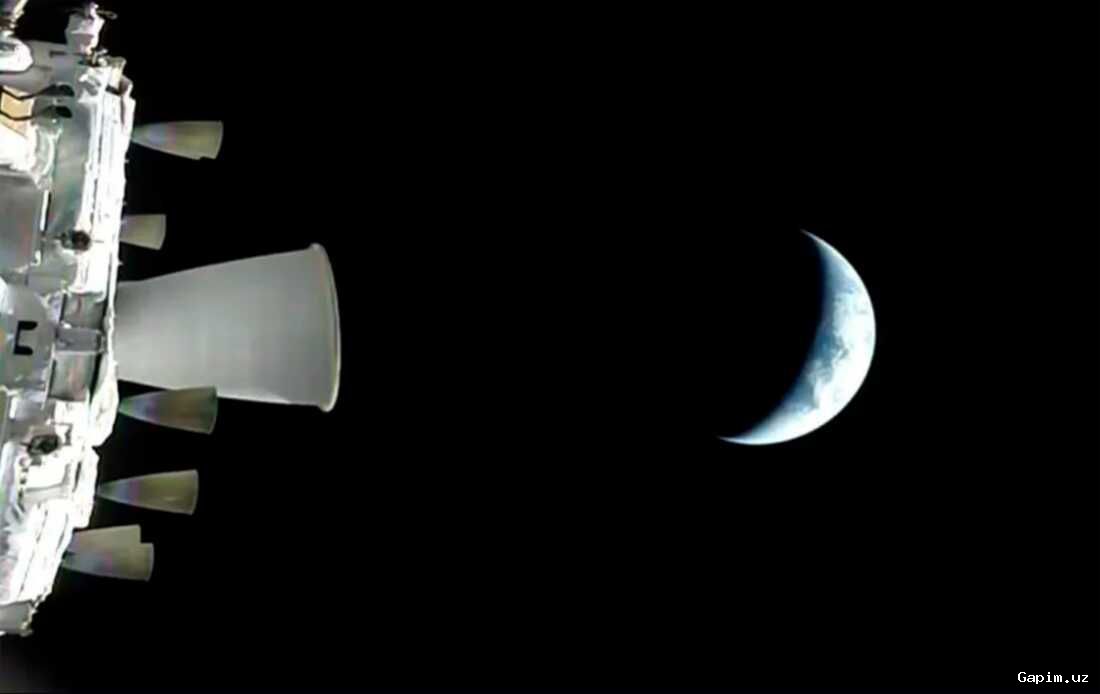
During the lunar flyby, the crew will spend over six hours analyzing and documenting features of the Moon's surface. The Orion capsule will then return to Earth via a "free-return trajectory," a journey that will take about four days. The astronauts began this landmark day with a message from the late Jim Lovell, a veteran of the Apollo 8 and 13 missions, who recorded it shortly before his death, urging the crew to enjoy the view and symbolically passing the torch of lunar exploration.
As they travel around the far side of the Moon, the astronauts are witnessing previously unseen lunar terrain. One image sent back by the crew revealed the Orientale basin, a massive crater that had only been viewed by uncrewed orbiting cameras before. Kelsey Young, the lead scientist for the Artemis II mission, emphasized that the human eye remains the "best camera" for lunar study, surpassing the capabilities of modern technology, highlighting the continued reliance on astronaut observations for scientific discovery.
The historic nature of the mission, led by Reid Wiseman, is further underscored by several firsts: Victor Glover will be the first person of color to fly around the Moon, Christina Koch the first woman, and Canadian Jeremy Hansen the first non-American. Communication with Artemis II will be lost for about 40 minutes during the flyby as the astronauts pass behind the Moon. NASA administrator Jared Isaacman stated that this mission is a crucial step in preparing for subsequent endeavors, such as the Artemis III mission in 2027 and a lunar landing as part of Artemis IV in 2028.
Source: www.aljazeera.com